July 8, 2024
Best Practices for Running a Successful Mentorship Program in Your Company

Building a successful mentorship program starts with clear, specific goals - the first and foundational step of any effective professional-development strategy. Defining these goals not only gives the program clear direction but also makes success measurable and performance precisely evaluable. By identifying what the organization wants to achieve through mentoring - whether improving specific skills, supporting job performance, or strengthening team collaboration - the program can be designed to reflect those goals directly and effectively.
Clear goals provide an evaluation benchmark that lets organizations track progress and adjust the program to keep meeting business needs and aspirations. Succeeding at this doesn't just lift individual performance - it raises overall organizational performance, making investment in mentoring a genuinely high-value investment.
At the heart of every successful employee mentorship program lies careful mentor selection - a decisive factor for the effectiveness and overall success of any training initiative. Core selection criteria should include broad professional experience in the targeted fields, exceptional communication skills, and the ability to build positive, motivating personal rapport with employees. These qualities let mentors transfer knowledge effectively and build trust across the team.
Beyond experience and personal capability, mentors need proper training to maximize program effectiveness - covering the latest in mentoring and professional development, plus handling common challenges employees face across their careers. Training should be comprehensive, built on modern courses including free mentor programs spanning personal skill-building to team collaboration.
Practical example:
At a leading technology company, a mentorship program was built around negotiation skills for sales managers. The company selected mentors with at least 15 years of sales and negotiation experience and enrolled them in an advanced course on certified free programs to keep their mentoring skills current. The result was tangible - a 30% uplift in sales-team performance in the program's first year.

Developing training materials and resources is vital for mentorship success. Comprehensive, carefully designed learning materials support mentors and mentees alike, enriching the learning experience and easing knowledge transfer and skill-building.
Resources can span e-learning courses, interactive workshops, detailed mentoring guides, and educational videos - all easily accessible to ensure fair, effective reach for every participant.
At our company, UpLevel,
we believe advanced learning resources continuously strengthen employee capabilities. We offer a wide range of certified courses and workshops across professional domains, so employees grow in a supportive, motivating environment.
Practical example: in one UpLevel course, a workshop on developing workplace social skills blended interactive guides with group activities to strengthen communication. Participating companies saw markedly better cross-department collaboration and healthier team climates.
Such resources don't just sharpen individuals - they lift collective performance, creating genuine added value for any organization pursuing success and excellence in modern business.
Organizing regular mentorship sessions:
Regular sessions are essential to skill development and mentoring. Maximum effectiveness demands scheduling methods that keep sessions consistent and easy for everyone to join.
First, time sessions to fit everyone's calendars around the hours that best support focus and interaction. Digital calendars and project-management tools help employees and mentors coordinate and update availability with ease.
Second, use sessions to track progress and resolve difficulties employees face. Recurring sessions give employees room to share experiences and receive constructive feedback, helping the team recognize strengths and weaknesses and act on them.
At our company, UpLevel, we use these sessions to nurture continuous learning - educational mentoring on topics like certified courses and social-skill development, drawing on professional mentors' expertise. Highly interactive, they equip employees for professional and personal growth.
Building an evaluation and follow-up system:
An effective evaluation and follow-up system is critical to sustained quality. Periodic evaluation lets organizations measure real mentoring impact and spot areas needing improvement - driving continuous refinement of processes and outcomes.
Evaluating mentors and mentees can combine assessment surveys, self-assessments, performance-based reviews, and peer and supervisor feedback - yielding valuable insight into effectiveness and goal attainment.
At our company, UpLevel, our evaluation system uses KPIs tailored to each mentorship program, tracking every employee's progress with regular, fitting feedback that fuels continuous professional development.
Investing in employee training and personal and professional skill-building is decisive for peak performance and sustainable success. Through clear goals, the right mentors, integrated training materials, regular sessions, and effective evaluation, organizations can secure the highest levels of performance and innovation.
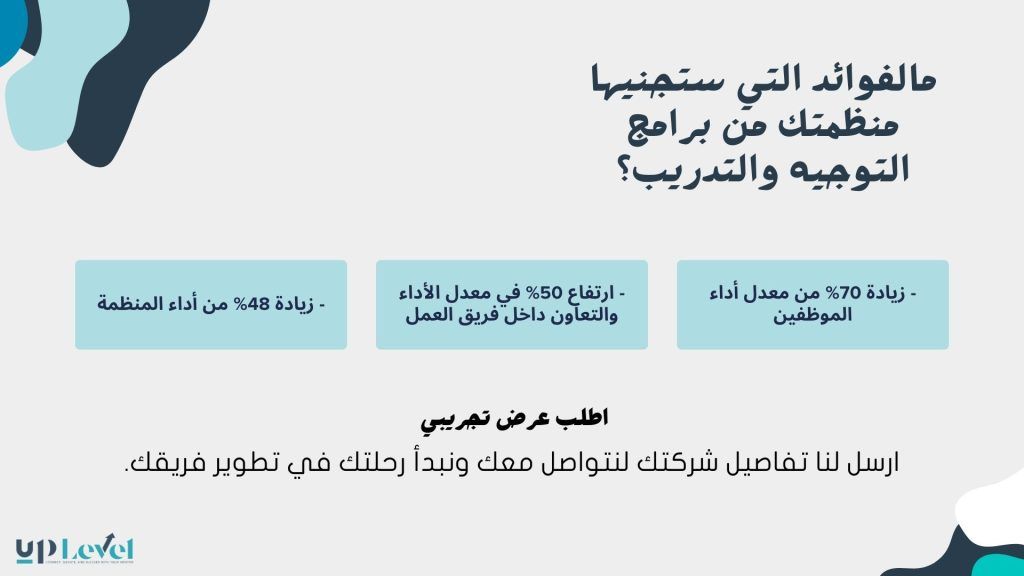
At UpLevel, we are committed to training solutions that meet institutional needs and drive growth. Your people are your greatest asset - investing in them reflects a commitment to excellence and leadership in your field. Reach out and start your team's journey toward remarkable results.